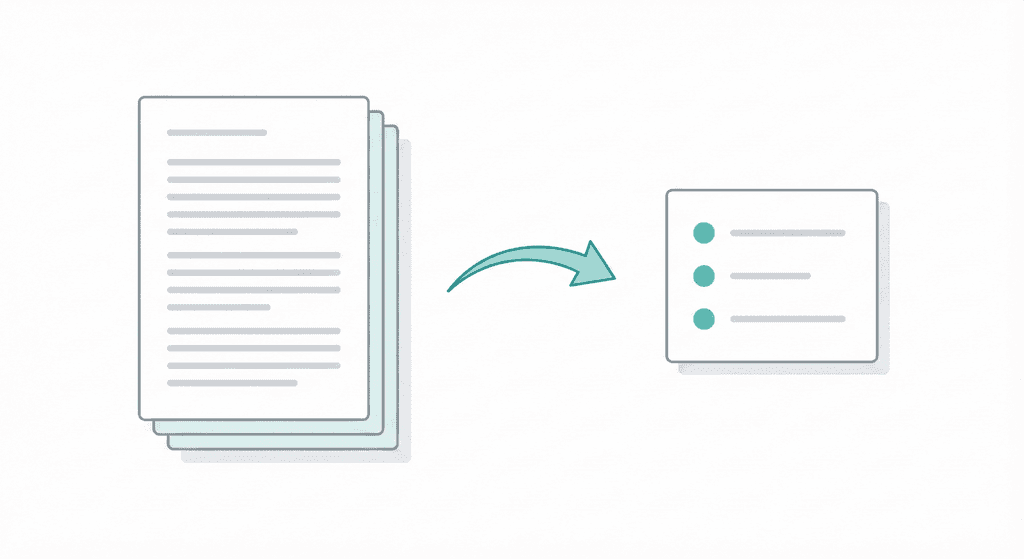
The real problem with long text
Long reports, articles, and meeting notes are useful, but they take time to read. Most summaries fail because they strip out the context, not just the fluff. The result is a short version that misses the point.
Why summaries often miss key points
- They skip the purpose of the original document.
- They ignore the structure (problem, evidence, decision, next steps).
- They remove the numbers, deadlines, or constraints that matter most.
A simple summary workflow that works
- Define the goal: Are you briefing a team, prepping for a meeting, or saving notes?
- Keep the structure: Capture the problem, evidence, decision, and actions.
- Compress, do not delete: Shorten sentences instead of removing entire ideas.
- End with actions: Include next steps, owners, or dates.
Example: summarizing a long report
Original: A 12-page quarterly update with performance metrics, risks, and a roadmap.
Summary:
- Performance: Revenue up 8 percent, churn down 2 points.
- Risks: Two enterprise renewals delayed to next quarter.
- Roadmap: Shipping new billing workflow in four weeks.
- Next steps: Confirm renewal schedule and finalize launch plan.
Who this is for
- Product and ops teams sharing updates
- Students condensing research
- Creators turning research into publishable notes
- Anyone who needs a fast, accurate overview
How TiniText helps
TiniText turns long input into clear takeaways you can reuse. It is fast enough for daily use and structured enough to keep your key points intact.