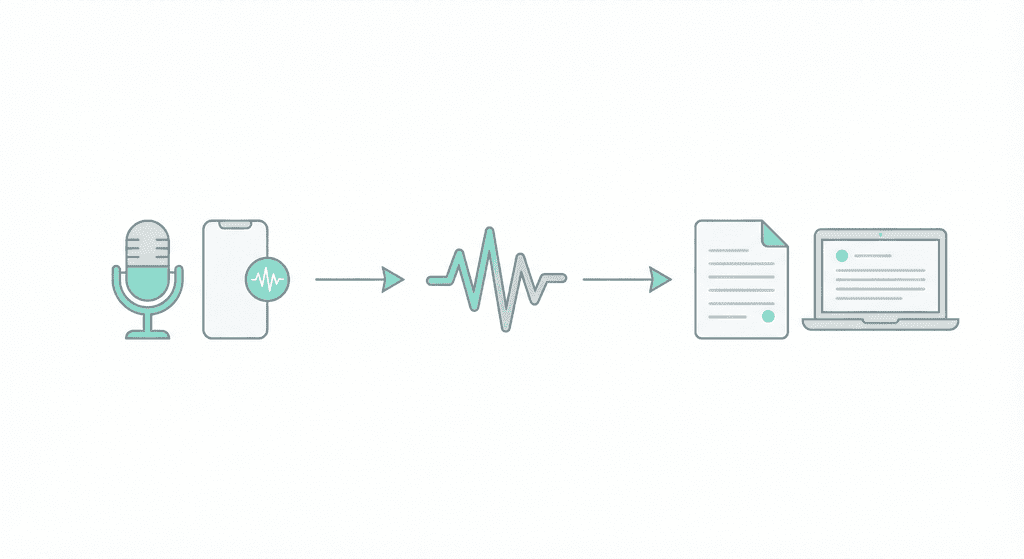
Why audio is hard to reuse
Great ideas get stuck in voice notes and meeting recordings. The problem is not the recording - it is the time it takes to turn that audio into clean, editable text.
Common transcription pain points
- Long files that are hard to skim
- Inconsistent speaker pacing or background noise
- Messy text that still needs formatting
A transcription workflow that stays clean
- Start with a clear recording: Reduce background noise when you can.
- Transcribe to text: Convert the audio into a first draft.
- Skim for structure: Add headings or bullets for key sections.
- Clean and format: Fix spacing, line breaks, and speaker labels.
Example: from meeting recording to action list
Input: A 25-minute project update call.
Output:
- Progress: Completed onboarding flow and tests.
- Blockers: Waiting on legal approval for new terms.
- Decisions: Launch moved to Friday.
- Next steps: Final QA on Wednesday, publish on Friday.
Who this is for
- Teams that run meetings
- Journalists and researchers
- Content creators repurposing interviews
- Anyone who stores ideas in voice memos
How TiniText fits
TiniText transcribes audio into readable text and pairs it with cleanup tools so you can reuse the content fast.